 PARTAGE NOIR
Home > Traductions > [en] English > Letter from the Anti-COP Anarchist Days
Center for Libertarian Culture of the Amazon - CCLA
Letter from the Anti-COP Anarchist Days 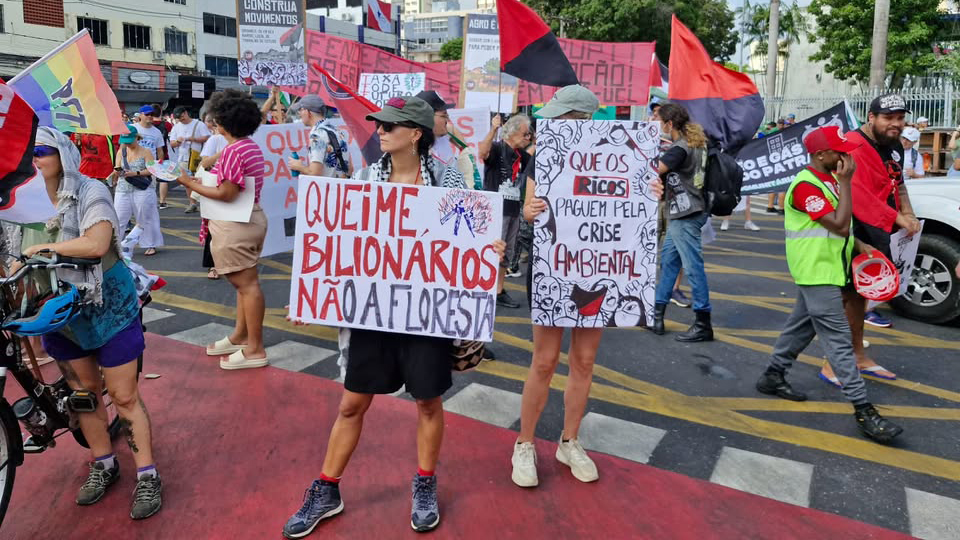
Saturday 6 December 2025, by (CC by-nc-sa)
All the versions of this article: [English] [Español] [français] [italiano] [Português do Brasil]
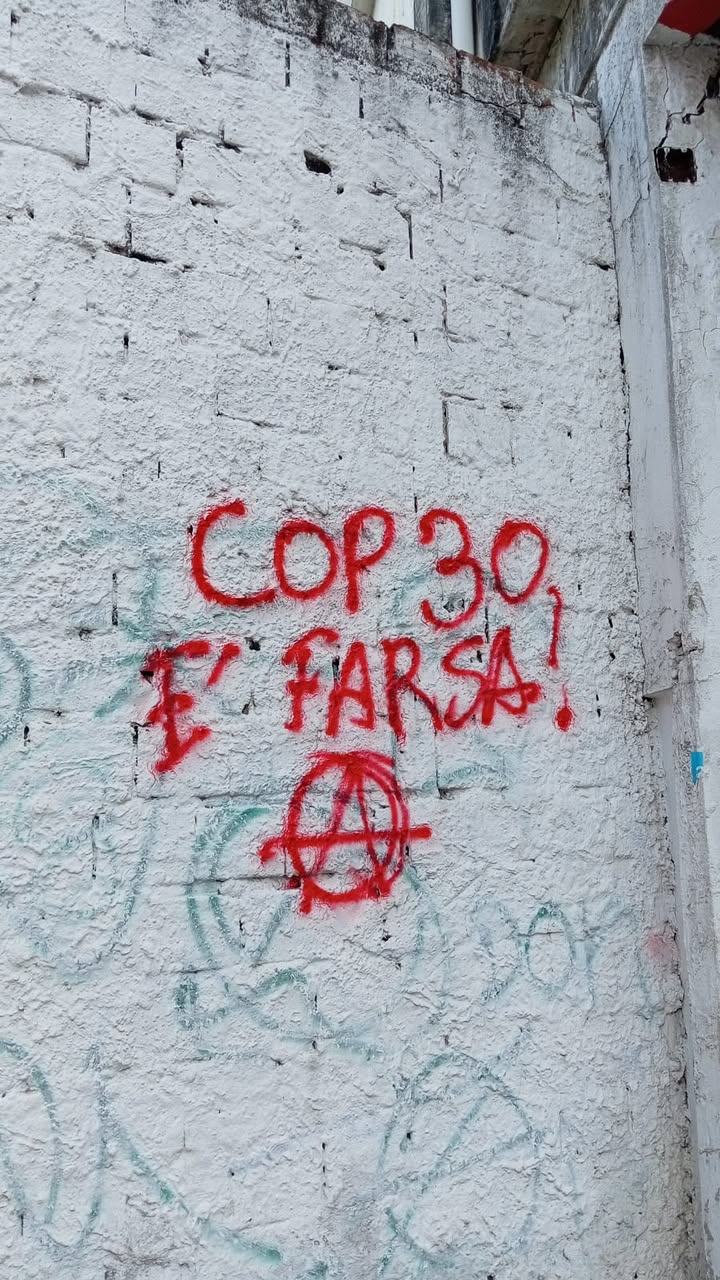
We, anarchists from the Center for Libertarian Culture of the Amazon, present our position regarding the 30th UN World Conference on Climate Change (COP30), held in Belém. Below we share some reflections developed during the Anti-COP Anarchist Days. From the outset, we considered the COP a farce in terms of solving or mitigating the environmental crisis caused by capitalism – and, as expected, this edition of the COP showed this in numerous ways. There was a record number of accredited lobbyists from the fossil fuel industry –nearly two thousand representatives – whose main objective was to discuss means of “energy transition” through more oil extraction and production. Meanwhile, more than 40 accredited representatives of Indigenous peoples were prevented from entering the Blue Zone because they did not have passports – yes, entering the most restricted area of the COP was the equivalent of crossing into another country.
Throughout the event, the Lula government promoted the implementation of TFFF ( Tropical Forests Forever Facility), yet another rent-seeking mechanism of financial capitalism that is far from offering any solution to environmental problems. It aligns with the same self-reinforcing mechanisms that produced the environmental crisis in the first place. For us, it is more of the same, with no significant changes for those who suffer most from the extreme events resulting from climate change.
Meanwhile, forest peoples remain without self-determination over their own territories. It is no coincidence that the two demonstrations that broke through the barricades of COP’s color-coded security zones were carried out by Indigenous peoples from the middle and lower Tapajós. These actions expressed widespread dissatisfaction with the course of the debates, which failed to address crucial issues for these peoples, such as the guarantee of saying no to carbon-credit market companies, mining and gold extraction in their territories, and no to the privatization of Amazonian rivers for the construction of waterways that will benefit only agribusiness monoculture latifundia and the mining sector.
The COP reproduces the capitalist economic logic of viewing everything that exists – even the air we breathe – as a commodity. Within this worldview, “solutions” can only be conceived in terms of market mechanisms. Ironically, on November 20th, the day of Dandara and Zumbi, a fire broke out in one of the Blue Zone tents, symbolizing an extreme climate event that literally set the COP on fire.
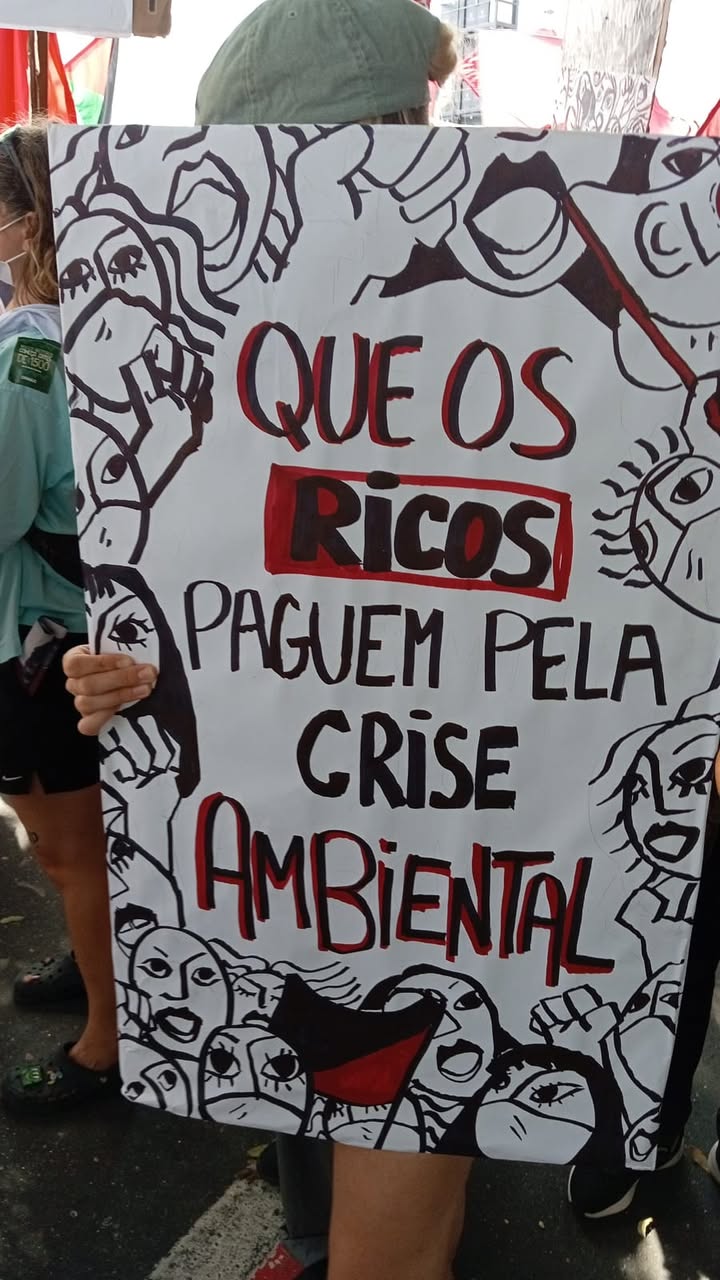
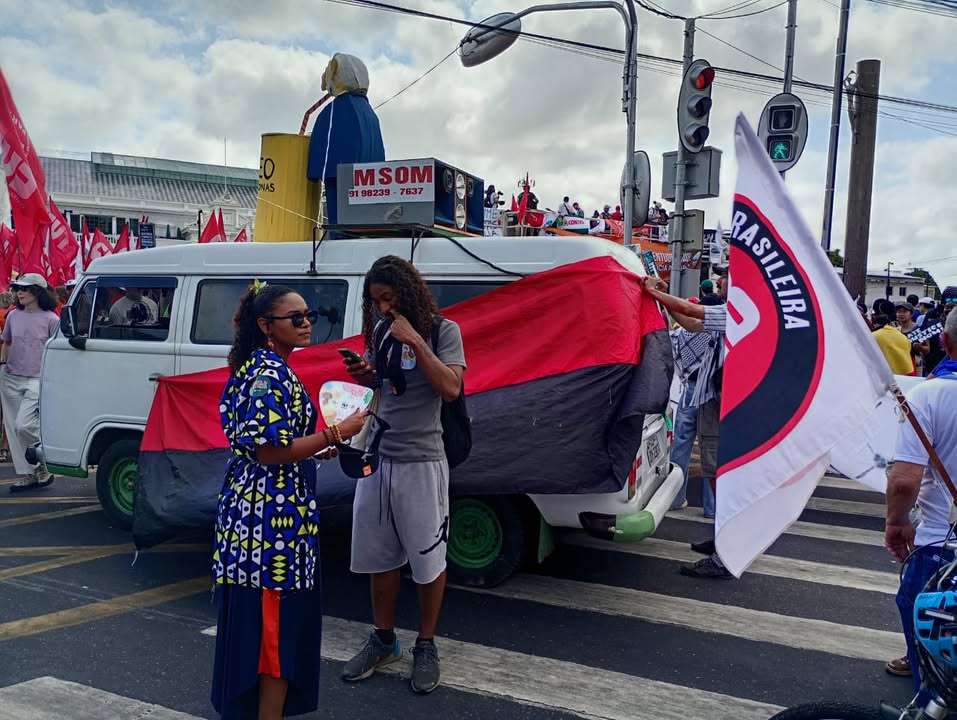
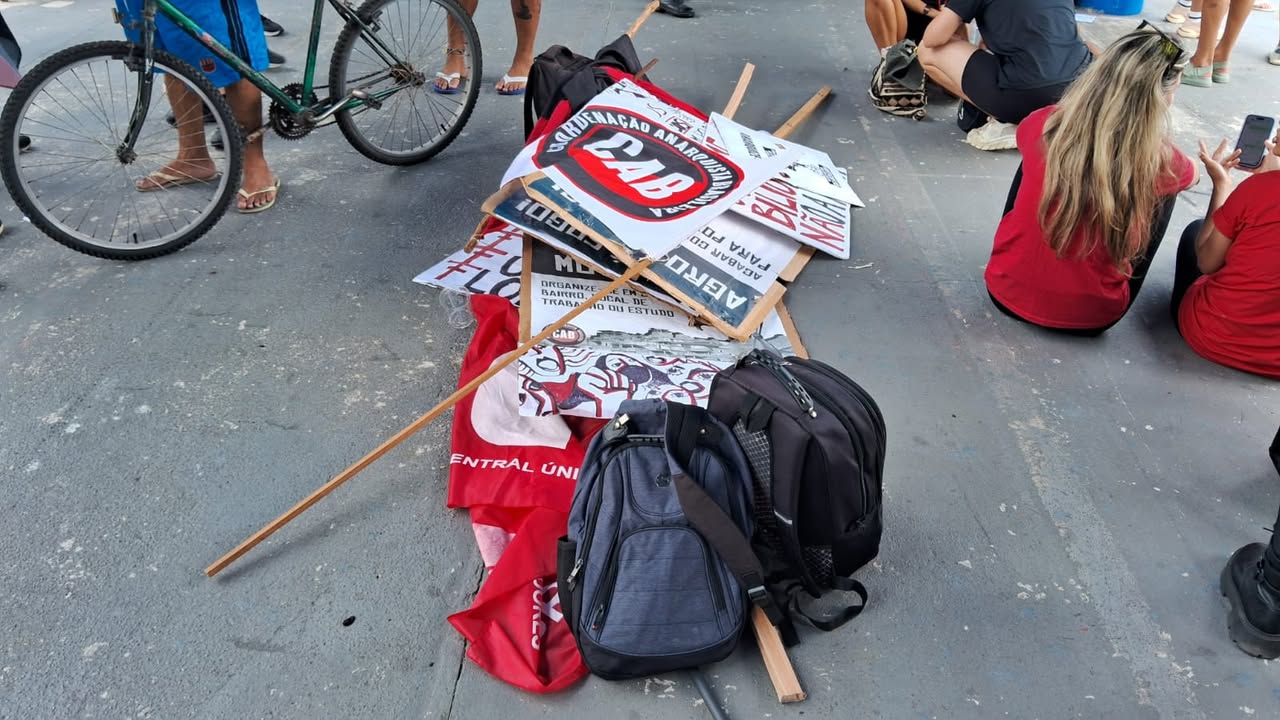
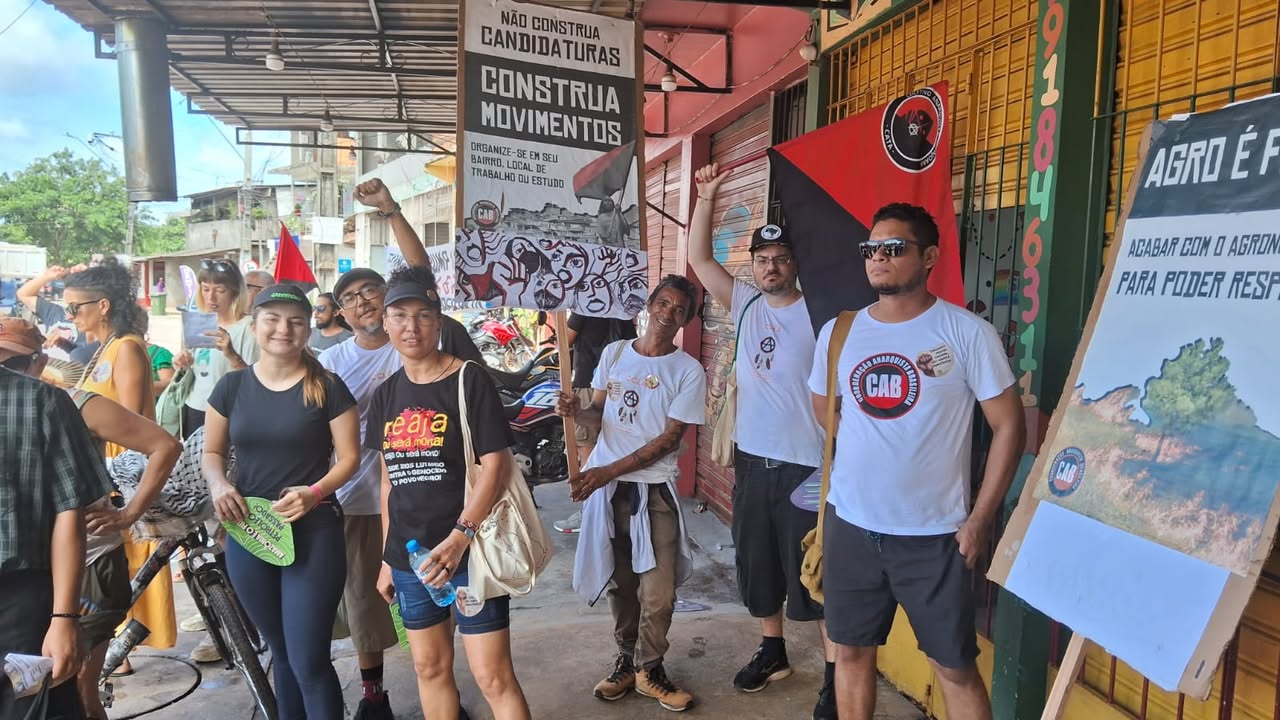
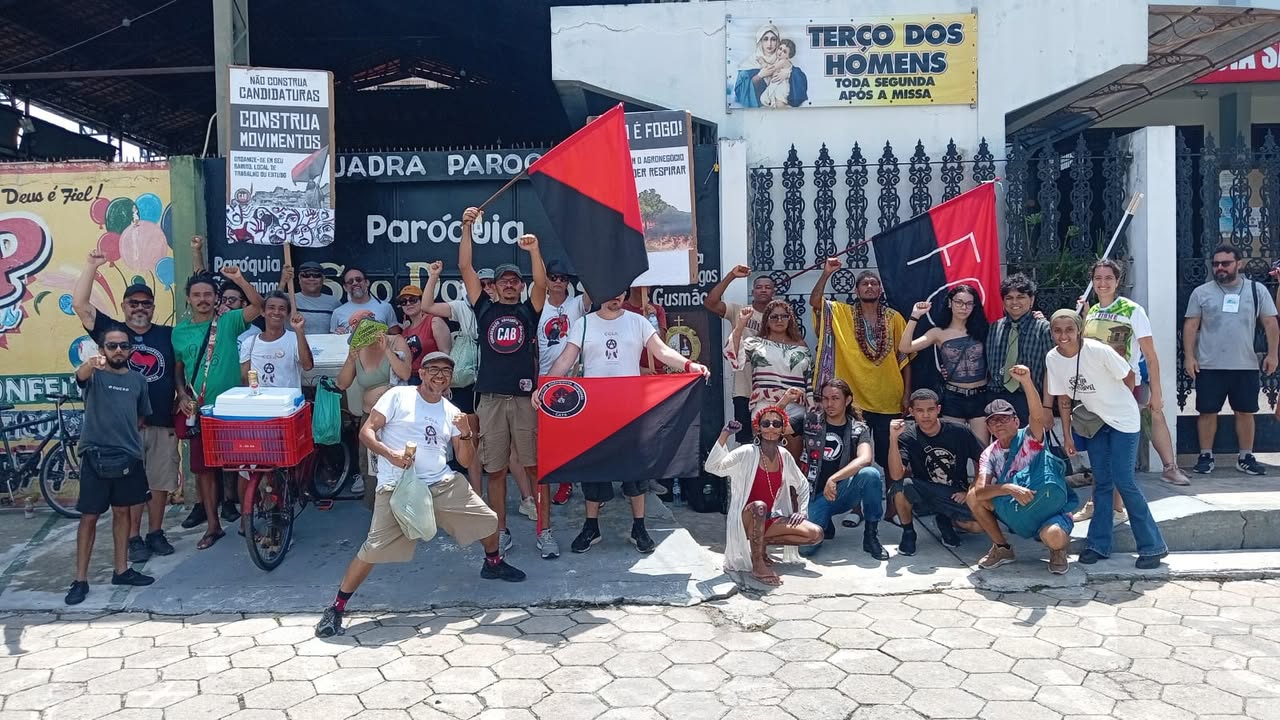
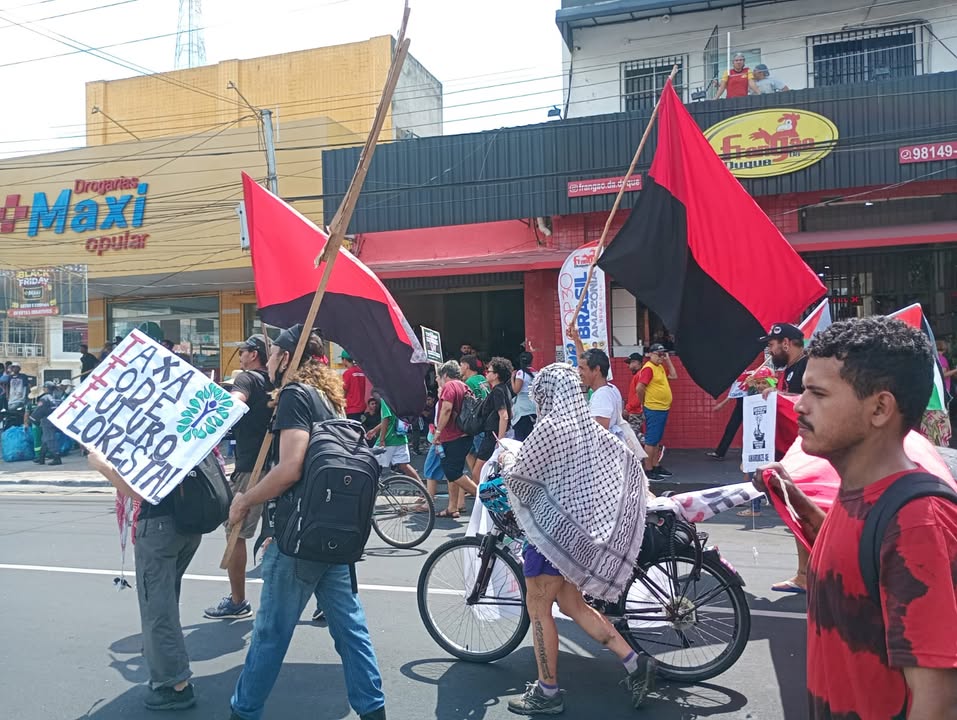
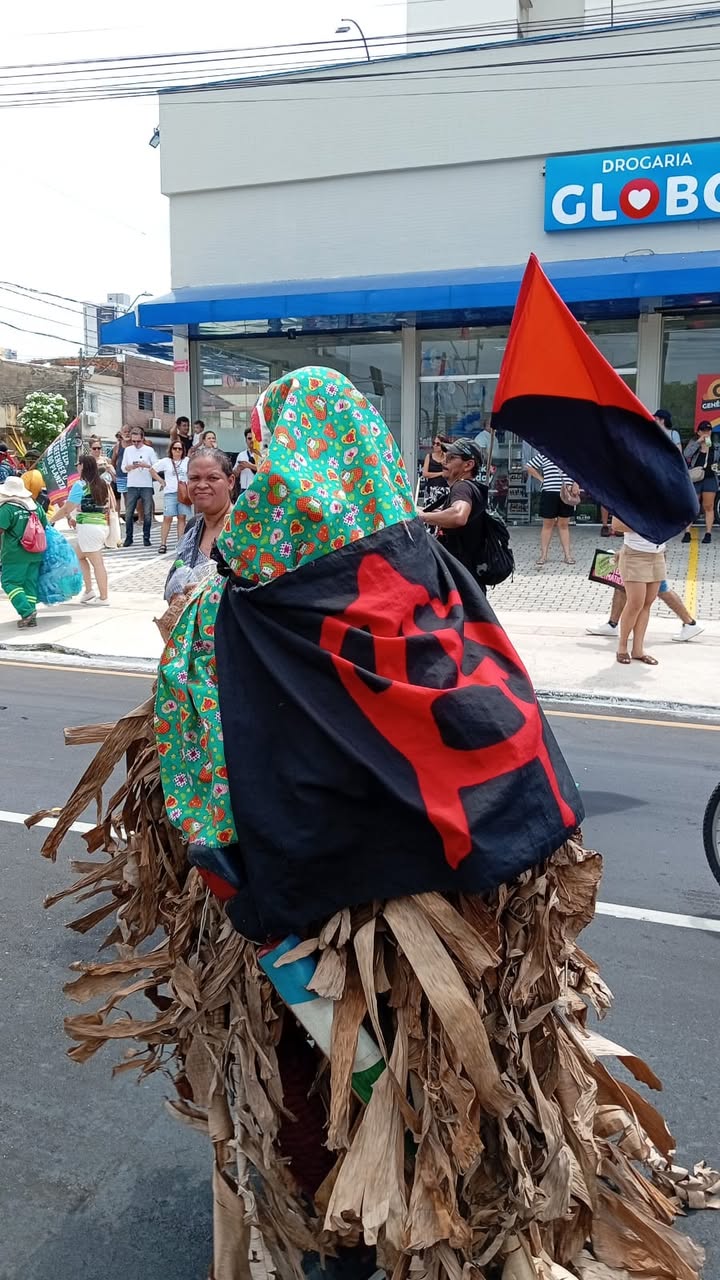
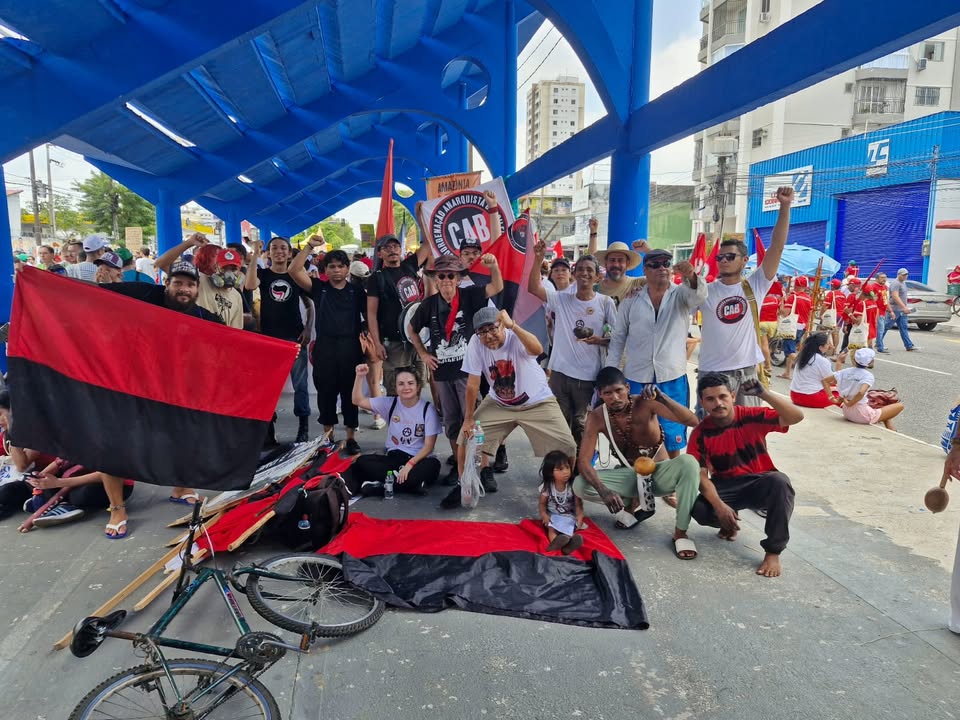
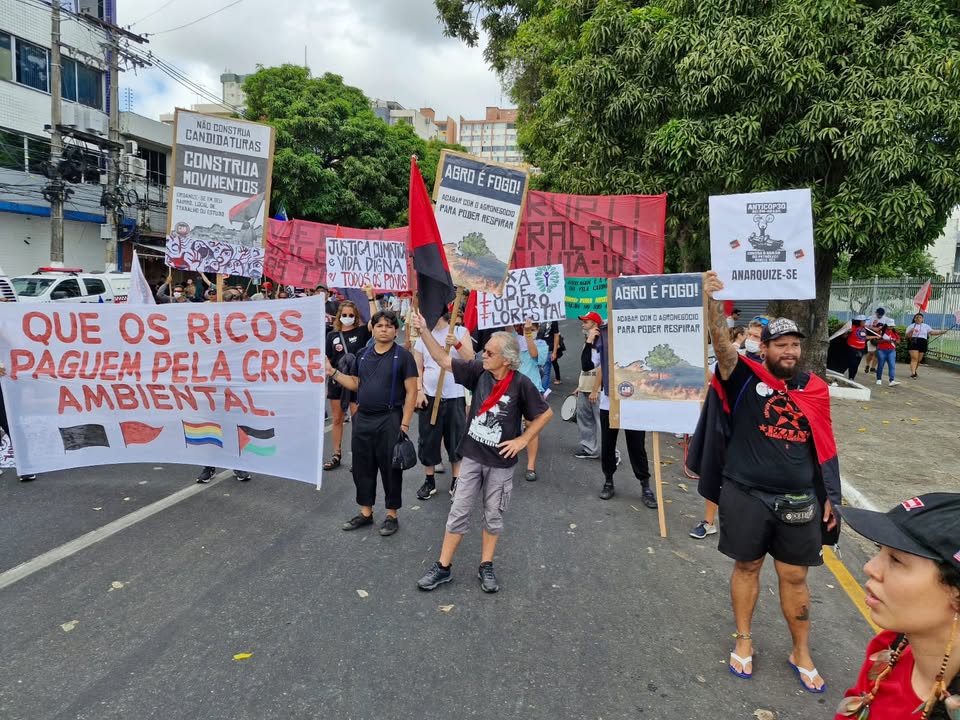
On the other hand, the activities of the Anti-COP Anarchist Days demonstrated that other worlds are possible – through the destruction of capitalism, the State, patriarchy, racism, and xenophobia. Over two weeks of actions, from street mobilizations like the Periphery March on Black Consciousness Day to discussions with comrades from different parts of Brazil and several countries, participants contributed their analyses, experiences, and struggles across multiple fronts of resistance against this system of domination/control/exploitation. In a broader perspective, considering the appropriate cultural and territorial scales, these are the same struggles and resistances we wage here in the Amazon.
These struggles are shaped by the imperialism of Global North powers alongside their colonialism and racism; by environmental devastation resulting from mining in Global South countries; by the situation of political–climate refugees; by the invasion of Indigenous and traditional territories; by real estate speculation in major urban centers; by human trafficking – especially of women; by speciesism, which sustains systems of animal mistreatment for human consumption; and by poverty, social inequality, and the concentration of wealth. These were some of the issues debated – in several languages and with diverse accents.
It is worth remembering that confronting this system of domination requires organization, militancy, conviction, and resistance—but also music, dance, and the construction of joy. In the words attributed to Emma Goldman: “If I can’t dance, it’s not my revolution.” Thus, we organized a Libertarian Arts Festival, another way of nurturing experiences of struggle and resistance through culture. We hosted performances by several musical groups and artistic acts, although we faced police repression – typical of this sector of the State, subservient to the petty elite that cannot stand to see the oppressed expressing their cultural practices.
We understand that there is no overcoming this crisis through oil and mining neo-extractivism; through techno–neo-developmentalism that requires the waste of millions of cubic meters of potable water to cool Big Tech data centers; through the monopoly of renewable energy companies such as wind and solar (the latter also driving the mineral rush for rare earth elements); through agribusiness; through depriving peoples of their right to live peacefully in their territories; through the privatization of everything from water to air; or through the maintenance of the privileges of the rich and colonial elites, sustained by poor housing conditions, illiteracy, hunger, genocide, sexual exploitation, and the poverty of the majority – especially Black or racialized populations. We do not support, and we struggle against, climate-change mitigation initiatives that fail to place the real problem at the center of the debate – namely, capitalism and its correlates.
We see in the practices of Indigenous and traditional peoples those who truly safeguard global biodiversity and forests, who remove tons of carbon dioxide from the atmosphere and help regulate the climate, and who discard the rent-seeking logic of carbon credits. Combined with the struggles and resistances of poor rural and urban populations across the globe – from north to south, east to west – who, despite immense humiliation and hardship in securing bread, tortilla, chipati or beiju, reinvent themselves through mutual aid and solidarity when their lives are struck by extreme climate events caused by the greed and profit of the wealthy. The COP offers no resolution for our problems; on the contrary, it is an organism created for the management of the environmental crisis, run by the same sectors that manage world hunger and poverty. Our urgencies do not fit within the COP. Solutions to the climate–environmental–social crisis already exist; now you and we know what they are and what we must do.
in the Belém peninsula, November 2025
View online : CCLA
| [Comic strip] Louise Michel (May 29, 1830 - January 9, 1905) - PDF | [Comic strip] Louise Michel (May 29, 1830 - January 9, 1905) - Booklet [PDF] |
 Letter from the Anti-COP Anarchist Days